Google Business Profile has become the cornerstone of local SEO strategy, directly influencing how businesses appear in Search and Maps results when customers are actively looking for products and services nearby. This platform, formerly known as Google My Business, gives companies with physical locations or service areas the ability to manage their digital storefront across Google’s ecosystem, turning searchers into customers through optimized, information-rich profiles.
The platform’s evolution continues to expand what businesses can showcase. Beyond basic contact details and hours, profiles now support direct display of products, services, booking options, stock availability, and reservation systems right within search results. Google has confirmed that complete, accurate Business Profiles significantly improve visibility in local rankings, making profile optimization no longer optional for businesses competing in geographic markets.
For marketing professionals and business owners, understanding how Google Business Profile functions within broader SEO strategy is essential. Verification status, information completeness, review management, and strategic use of posts for promotions and updates all contribute to ranking signals. As a Google Partner with deep Canadian digital marketing expertise, we’ve seen firsthand how businesses that treat their Business Profile as a dynamic marketing channel rather than a static listing consistently outperform competitors in local search visibility and customer acquisition.
What Changed: Google Business Profile Evolution

In 2021, Google rebranded Google My Business as Google Business Profile, marking more than a cosmetic name change. The shift reflected a fundamental repositioning of how Google integrates business information into its core search and mapping products. Rather than treating local business listings as a separate management platform, Google Business Profile now functions as the direct interface for how businesses appear across Google Search and Google Maps, positioning it as an essential touchpoint in the customer discovery journey rather than an optional directory listing.
The evolution brought significant functional expansion. Google explicitly states that Business Profiles can help turn people who find businesses on Search and Maps into new customers, emphasizing conversion alongside visibility. Businesses can now personalize profiles with photos, manage customer reviews, and communicate what makes them unique. The platform enables direct display of products, services, orders, reservations, stock availability, and booking options from the profile itself, reducing friction in the path to conversion. Businesses can share real-time updates including current hours, contact information, posts about special offers, events, and other timely information, all of which signal freshness to Google’s algorithms.
This integration means optimization for Google Business Profile is no longer separate from broader local SEO strategy. Google’s own guidance confirms that businesses with complete and accurate information are more likely to appear in local search results, and that verification improves local ranking. The platform now represents the intersection of profile completeness, customer engagement signals, and search visibility, making it a critical lever for businesses targeting local markets.
Key Developments: Enhanced Profile Capabilities
1. Profile Personalization and Visual Optimization

Google Business Profile personalization features now serve as ranking signals for local search, making visual and descriptive completeness a strategic priority. Businesses that invest in photos, distinctive business details, and thorough profile customization see measurable improvements in both search visibility and click-through rates from local results.
High-quality photos directly influence consumer behavior and search performance. Google prioritizes profiles with current images of storefronts, interiors, products, services, and teams because these visuals help users evaluate relevance before clicking. Businesses should upload photos regularly, ideally at least once per month, to signal active management and freshness to Google’s algorithm. Images also occupy premium real estate in knowledge panels and map results, increasing the visual footprint that draws attention away from competitors.
Profile completeness matters for rankings. Google explicitly states that businesses with complete and accurate info are more likely to appear in local search results. This extends beyond basic name, address, and phone details to include:
- Business category selection and attributes that match actual services
- Detailed service or product descriptions with specific offerings
- Operating hours including special hours for holidays
- Accepted payment methods and accessibility features
- Business description highlighting unique differentiators within the character limit
The business description field deserves particular attention. While not a direct keyword-stuffing opportunity, it provides context that helps Google understand relevance for search queries. Write naturally about what makes the business distinctive, the problems it solves, and the geographic area it serves. This narrative feeds Google’s understanding of when to surface the profile for informational and transactional searches alike.
Accuracy matters as much as completeness. Inconsistent information across your profile, website, and other citations confuses Google’s confidence signals and can suppress rankings.
2. Direct Transaction and Service Features
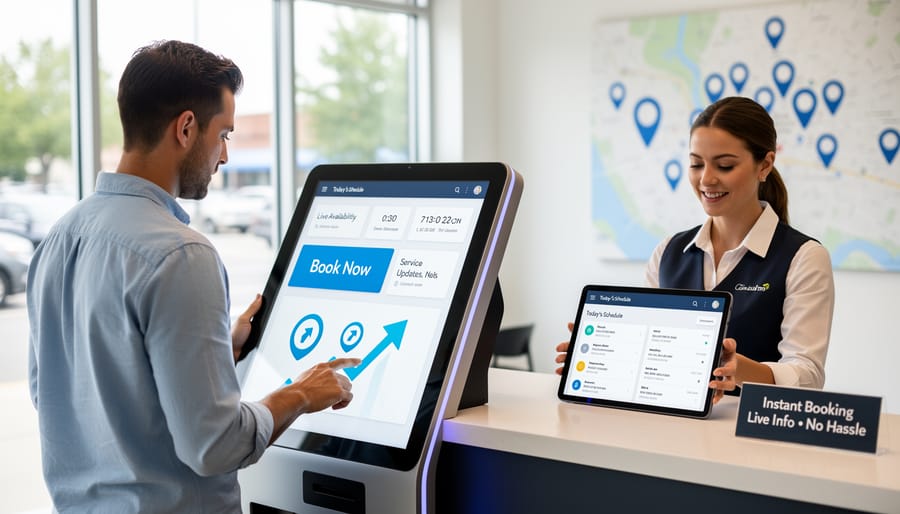
Google Business Profile now functions as a conversion platform, not just a listing. Businesses can display their products and services with rich details, photos, descriptions, pricing, and availability, directly within the profile. This creates a digital storefront where potential customers can evaluate offerings without visiting an external website, shortening the path from discovery to decision.
The platform supports direct transaction capabilities that reduce friction significantly. Service-based businesses can enable booking buttons for appointments, while product sellers can showcase inventory with real-time stock status. Restaurants can integrate reservation systems, and retailers can process orders through connected platforms. When customers see what they need and can act immediately, conversion rates improve, and Google notices. Profiles with active transaction features send stronger engagement signals, contributing to better local search positioning.
These capabilities do more than convenience for users; they demonstrate business legitimacy and activity to Google’s ranking algorithm. A profile displaying current inventory, accepting bookings, or processing orders indicates an operational, customer-focused business. This aligns with Google’s stated priority: complete, accurate business information improves visibility in local results. The transaction features provide concrete proof of that completeness while generating the engagement metrics, clicks, calls, direction requests, that influence where profiles appear in competitive local searches.
The strategic advantage comes from treating your profile as an active sales channel, not static information. Update product catalogs regularly, maintain accurate service descriptions, and ensure booking systems function properly. Each active feature reinforces your profile’s value to searchers and to Google’s assessment of relevance.
3. Real-Time Information and Post Updates
Google Business Profile posts function as a dynamic communication channel that keeps your profile fresh and signals active management to Google’s algorithm. Businesses can publish updates about special offers, announce events, share new products or services, and highlight important changes such as seasonal hours or temporary closures. These posts appear directly in your Business Profile on both Search and Maps, providing immediate visibility to potential customers searching for relevant terms.
The SEO value of posts extends beyond simple communication. Google’s algorithm interprets regular posting activity as a signal that your business is active and engaged with customers, which can positively influence your local search rankings. Posts create additional indexed content associated with your business, expanding the topical relevance signals Google uses to match your profile with search queries. When you announce a special event or promotion, you create timely content that aligns with seasonal search patterns and local interest.
Beyond posts, keeping basic information current delivers measurable SEO impact. Your business hours, phone number, website link, and service area form the foundation of local relevance. When these details match what Google finds across other trusted sources on the web, you strengthen the consistency signals that build algorithmic trust. Updating your hours for holidays, confirming contact information remains accurate, and reflecting any operational changes ensures Google can confidently display your business when users search with location-specific or real-time intent such as “open now” queries.
Why It Matters: Impact on Local SEO Strategy
Google Business Profile optimization sits at the intersection of local discovery and conversion. According to Google, businesses with complete and accurate information are more likely to show up in Search and Maps which determines whether potential customers find you before competitors. This connection between profile completeness and visibility isn’t passive advice, it’s Google’s algorithm prioritizing businesses that demonstrate authority through verified, detailed information.
The business impact extends beyond rankings. A properly optimized profile acts as a conversion funnel, allowing customers to view products, check availability, read reviews, and book services without leaving Google’s ecosystem. When someone searches for services you offer, your profile becomes the first impression and often the deciding factor. Companies that integrate profile management into their broader digital strategy can measure local results through direct attribution from profile interactions to customer actions.
Verification and review management carry particular weight in Google’s local ranking signals. Verified businesses receive a trust indicator that both the algorithm and users value when comparing similar options. Review quality and response patterns signal active management and customer engagement, factors that influence both positioning and click-through rates in local packs.
The competitive dimension matters equally. In local markets, the difference between appearing first or fourth in local results often comes down to profile optimization details, verified status, photo quality, information completeness, and regular updates. Businesses treating their Google Business Profile as static listings rather than dynamic marketing assets concede advantage to competitors who maintain fresh, comprehensive profiles aligned with how customers actually search.
Best Practices for Google Business Profile SEO
To maximize your Google Business Profile’s impact on local search rankings, start with complete information architecture. Google confirms that businesses with complete and accurate information are more likely to show up in local search results, making profile completeness a non-negotiable foundation. Fill every available field: business category, service areas, attributes, hours (including special hours for holidays), phone number, and website URL. Inconsistent or incomplete data signals lower trustworthiness to Google’s algorithm.
Verification delivers immediate SEO benefits. Google states that verifying your business improves local ranking, yet many businesses delay this step. Complete verification through your preferred method (postcard, phone, or email depending on eligibility) to unlock full profile features and ranking potential.
Visual optimization drives both rankings and conversions. Upload high-quality photos of your location, products, services, and team. Google prioritizes profiles with fresh, relevant images in local pack results. Add photos monthly to signal active management, and ensure your cover photo clearly represents your business identity.
Review management requires systematic attention. Respond to every review within 48 hours, addressing specific points customers raise. Google’s algorithm weighs review velocity, volume, and recency when determining local rankings. Build review acquisition into your customer journey rather than treating it as an afterthought. This approach integrates naturally with your strategic marketing plan by creating consistent touchpoints for customer feedback.
Leverage posts to maintain freshness signals. Share updates about special offers, events, new products, or seasonal services weekly. Posts remain visible for seven days, so consistent publishing demonstrates active engagement to both users and Google’s crawlers.
Apply unique marketing techniques through the Products and Services sections. Detailed service descriptions with specific pricing ranges and attributes help Google match your profile to relevant searches. The more specific your offerings, the better Google can connect you with high-intent local searchers.
For Canadian businesses, ensure your profile reflects bilingual capabilities where applicable, particularly in markets like Montreal or Ottawa where language preferences affect search behavior.
What to Watch: Future Considerations for Local Search
Looking ahead, Google’s local search ecosystem continues to evolve, and businesses must remain vigilant to maintain their competitive edge. The platform regularly refines how it evaluates profile completeness, review signals, and user engagement metrics, factors that directly influence local rankings. Companies that treat their Google Business Profile as a static listing risk falling behind competitors who actively optimize and update their presence.
One critical trend involves Google’s increasing emphasis on authenticity and real-time accuracy. The platform now deploys sophisticated algorithms to detect inconsistent information across the web, from NAP (name, address, phone) discrepancies to outdated business hours. Businesses should audit their profile quarterly to ensure all details align with their website and other online directories. This consistency becomes especially important for Canadian businesses operating across multiple provinces, where regional variations in contact information or service offerings need careful management.
The integration of artificial intelligence into search results presents both opportunities and challenges. Google’s systems increasingly interpret user intent and match it with specific profile attributes, meaning a well-structured services section or detailed product catalog can surface your business for queries you might not have explicitly targeted. Staying informed through Google Partner insights helps businesses understand these algorithmic shifts before they become widely recognized.
Review velocity and response patterns have emerged as growing ranking signals. Businesses that consistently generate fresh reviews and demonstrate thoughtful engagement outperform those with higher ratings but stale feedback. This shift rewards ongoing customer relationship management rather than past performance alone, making review solicitation and response protocols essential components of any local SEO strategy moving forward.
Does verifying my Google Business Profile actually improve local search rankings?
Yes. Google explicitly states that verifying your business can improve local ranking, and verified profiles signal legitimacy to both Google’s algorithm and potential customers searching in your area.
How much does profile completeness affect my visibility in local search results?
Google confirms that businesses with complete and accurate information are more likely to show up in local search results. This means filling out every available field, hours, services, photos, contact details, directly impacts whether you appear when customers search.
Should I manage Google Business Profile separately from my website SEO strategy?
No. Your Google Business Profile works alongside your website as part of a unified local SEO strategy. Consistent information across both platforms strengthens your credibility signals, while your profile can drive qualified traffic to your site and complement your broader search optimization efforts.
How often should I update my Google Business Profile to maintain rankings?
Regular updates matter for maintaining freshness signals. Share posts about special offers, events, and business updates as they happen, and immediately update critical information like hours or contact details when they change. Active profiles signal to Google that your business is current and engaged with customers.
The relationship between Google Business Profile optimization and traditional website SEO isn’t either-or. Both feed the same goal of connecting your business with customers through search. Your profile acts as a front door for local searches, while your website provides the depth once someone wants to learn more. Keeping both aligned on core business information, keywords, and customer engagement strengthens your overall search presence rather than splitting it.