Remove distracting showroom backgrounds, cluttered parking lots, and inconsistent lighting from your automotive inventory photos in seconds rather than hours. AI-powered background removal technology has transformed how dealerships and automotive marketers present their vehicles online, directly impacting conversion rates as buyers’ shopping behaviour increasingly prioritizes visual quality and consistency across digital channels.
Traditional photo editing requires skilled designers, substantial time investment, and significant costs per image. A single vehicle shoot might produce 20-30 photos, each needing manual background removal and replacement. That’s 2-3 hours of work per vehicle at $50-100 per hour. Modern AI solutions process the same batch in under five minutes at a fraction of the cost.
The business case is straightforward. Professional, consistent vehicle imagery increases click-through rates by 30-40% on automotive marketplace listings and drives longer page engagement on dealer websites. Clean backgrounds eliminate visual noise, putting complete focus on the vehicle’s features and condition. This matters when competing against thousands of similar listings where image quality often determines which vehicles receive serious consideration.
Google Partner-certified agencies serving Canadian automotive clients have documented measurable ROI improvements when implementing automated background removal workflows. The technology handles complex edges around mirrors, wheels, and grilles with precision that previously required painstaking manual work. Integration with existing photography workflows takes hours, not weeks, making this accessible to independent dealers and large car background editing tool operations alike.
Why Background Quality Makes or Breaks Car Advertisements
The human brain processes visual information in milliseconds, making snap judgments about credibility and value before conscious thought takes over. In automotive advertising, the background behind your vehicle plays a decisive role in that split-second assessment. A cluttered parking lot, visible price tags on neighboring cars, or an inconsistent mix of sunny and overcast shots across your inventory sends immediate signals about professionalism, or the lack of it.
Research in visual marketing consistently shows that viewers struggle to focus on primary subjects when backgrounds compete for attention. A car photographed in front of a busy street scene forces potential buyers to mentally filter out distractions rather than appreciate the vehicle’s features. This cognitive load reduces engagement and shortens the time viewers spend evaluating your listing. Worse, unprofessional backgrounds create an unconscious association with lower quality, directly impacting the perceived value of the vehicle itself.
Automotive marketers face unique photography challenges that compound these issues. Dealerships rarely have dedicated photo studios, forcing sales teams to shoot inventory wherever space permits. Weather conditions change throughout the day. Reflective car surfaces capture surrounding environments, other vehicles, buildings, even the photographer. Glass windows and chrome details amplify these problems, creating visual chaos that no amount of careful angles can fully eliminate.
The credibility stakes are particularly high for dealers competing online. When a buyer scrolls through marketplace listings or comparison sites, they’re making immediate judgments about which sellers warrant serious consideration. A dealership presenting vehicles against consistent, clean backgrounds signals investment in quality and attention to detail. Mixed backgrounds with visible clutter, random objects, or amateurish lighting suggest a operation that cuts corners, a perception that extends beyond the photos to assumptions about vehicle condition and business practices.
This visual inconsistency doesn’t just affect individual listings. It fragments your brand identity across every platform where your inventory appears, making professional presentation not just preferable, but essential for competitive positioning.

How AI Background Removal Works for Automotive Marketing
AI background removal technology combines computer vision and deep learning neural networks trained specifically to recognize vehicles and their complex visual characteristics. Unlike generic image editing tools, automotive-focused AI models have analyzed millions of car images to understand the unique challenges vehicles present, curved metal surfaces, transparent windows, intricate wheel spokes, and chrome details that reflect their surroundings.
The process begins when you upload a vehicle photo. The AI instantly analyzes the image, identifying the car’s boundaries by recognizing patterns it learned during training. It distinguishes between the vehicle and background by evaluating color gradients, textures, and spatial relationships. Advanced algorithms detect edges with precision, even where reflective paint meets complex backgrounds or where glass windows show through to scenery behind the vehicle.
What separates modern AI from older automated tools is its ability to make intelligent decisions about ambiguous areas. When processing a black car against a dark background, or a white vehicle in bright sunlight, the AI considers contextual clues, body panel curves, typical vehicle proportions, and shadow patterns, rather than relying solely on color contrast. This contextual understanding prevents the jagged edges and missing details that plague simpler selection tools.
The technology handles transparent and semi-transparent elements through sophisticated layering. When processing windshields and windows, the AI recognizes these areas as part of the vehicle structure while understanding they contain see-through properties. It maintains the glass appearance, including reflections and slight tinting, without treating these areas as background to be removed.
Traditional manual editing requires a skilled designer 20-45 minutes per vehicle image, carefully tracing edges with selection tools, refining problem areas, and recreating shadows. AI completes the same task in 3-15 seconds with comparable or superior accuracy. The speed difference transforms what was once a bottleneck into an automated step, letting marketers focus on strategy rather than pixel-level editing. Batch processing capabilities mean you can process your entire monthly inventory upload in the time it once took to perfect a single hero image.
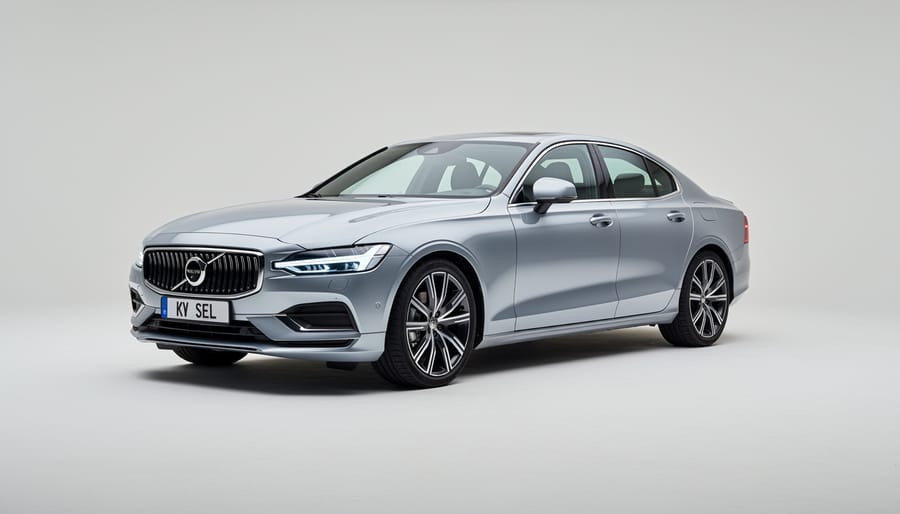
Key Benefits of AI Background Removal for Car Dealerships and Advertisers
Speed and Scale: Processing Hundreds of Vehicles Daily
Traditional photo editing creates a massive bottleneck for automotive marketers. A skilled editor might spend 15-20 minutes perfecting a single vehicle image, removing the background, masking reflections, and preserving wheel details. For a mid-sized dealership with 200 vehicles in inventory, that translates to 50-60 hours of editing work. Multiply that across monthly inventory turnover, and the resource drain becomes unsustainable.
AI background removal collapses these timelines dramatically. Modern AI tools process each vehicle image in 5-15 seconds, maintaining professional quality while handling complex elements like transparent windshields and chrome trim. That same 200-vehicle inventory? Fully processed in under an hour of actual work time.
This speed advantage transforms operational workflows. Dealerships can photograph new arrivals in the morning and have them listed with professional backgrounds by afternoon. Weekly inventory updates become realistic instead of aspirational. Marketing teams shift from reactive editing queues to proactive campaign development, launching seasonal promotions or targeted ads without waiting days for image assets to catch up.
Brand Consistency Across All Marketing Channels
Uniform vehicle backgrounds create instant brand recognition across every touchpoint where potential buyers encounter your inventory. When a customer sees your cars on AutoTrader, then visits your Facebook page, and finally lands on your dealership website, consistent visual presentation reinforces professionalism and builds trust. Mixed backgrounds, showroom floors in some images, parking lots in others, and outdoor locations scattered throughout, signal disorganization and make your operation appear less established.
AI background removal solves this fragmentation by standardizing every vehicle photo with your chosen backdrop template. Whether you select a clean white studio background, a sophisticated gradient, or a branded environment featuring your dealership colors, that consistency carries through all platforms simultaneously. The visual cohesion extends beyond digital channels; the same processed images work for print advertisements, direct mail campaigns, and billboard designs without requiring separate shoots or editing workflows.
This uniformity matters particularly for multi-location dealerships where different photographers and lighting conditions previously created jarring visual inconsistencies. AI processing creates a unified brand identity that customers associate with quality and attention to detail, attributes that directly influence purchase decisions in competitive automotive markets.
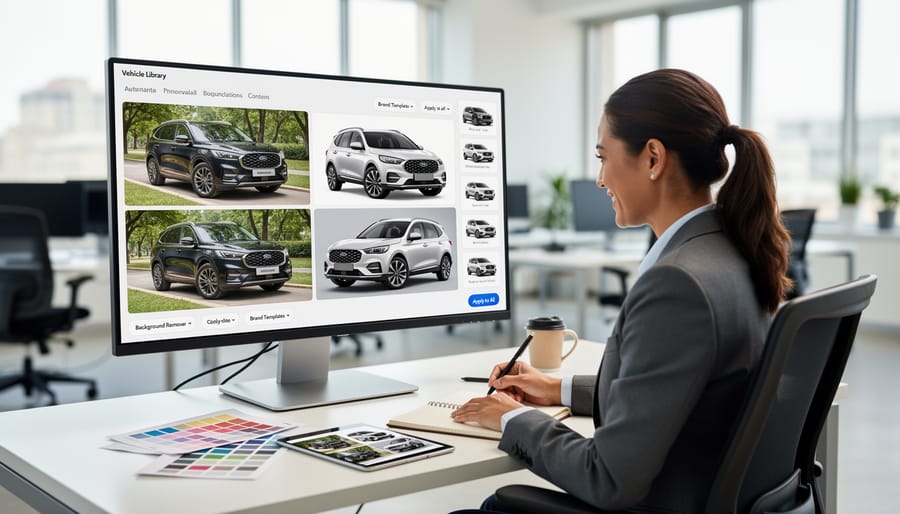
Cost Savings Compared to Traditional Photo Editing
The financial case for AI background removal becomes clear when you compare actual costs per image. Traditional methods carry hidden expenses beyond the obvious per-photo rate.
| Method | Cost Per Image | Time Per Image | Monthly Capacity |
|---|---|---|---|
| In-House Manual Editing | $15-25 | 15-30 minutes | 320-640 images |
| Outsourced Editing | $5-12 | 24-48 hours turnaround | Variable, delays common |
| AI Solution | $0.10-2 | 30-90 seconds | Unlimited |
For a dealership processing 200 vehicle photos monthly, switching from outsourced editing at $8 per image to an AI solution at $1 per image saves $1,400 monthly, or $16,800 annually. High-volume operations see even greater returns. Factor in the speed advantage and you eliminate the bottleneck that delays listings from going live, directly impacting how quickly inventory moves.
Best Practices for Implementing AI Background Removal in Your Car Ad Workflow
Selecting Background Templates That Drive Conversions
The background you select after AI removal directly impacts viewer perception and conversion potential. Studio white or gradient backgrounds work best for inventory listings and comparison shopping because they eliminate distractions and let the vehicle’s features shine. These clean backgrounds typically perform 15-20% better on listing platforms where buyers evaluate multiple options side-by-side.
Lifestyle backgrounds, urban settings, mountain roads, or upscale driveways, strengthen emotional connection and help buyers visualize ownership. Use these for social media campaigns and premium vehicle promotions where aspiration matters more than specification comparison. Match the setting to your target demographic: luxury buyers respond to architectural backgrounds, while adventure-focused buyers engage with outdoor scenery.
Transparent backgrounds offer maximum flexibility for dynamic ad placement across digital channels. They adapt seamlessly to any website design or social media layout without visual conflict.
Test performance data from your specific market. A downtown Toronto dealership might find urban backgrounds outperform studio shots, while rural markets may see opposite results. Track click-through rates and inquiry conversions by background type, then optimize your template library accordingly. The right background choice amplifies your vehicle’s appeal rather than competing for attention.
Maintaining Realism: Shadows, Reflections, and Lighting
The “floating car” effect, where vehicles appear unnaturally suspended against their new background, immediately signals amateur editing and undermines credibility with potential buyers. Professional results require attention to three critical elements.
First, preserve or recreate ground shadows. AI tools that maintain original shadows produce the most convincing results. If the algorithm removes shadows entirely, add a subtle gradient shadow beneath the vehicle that matches the lighting direction of your chosen background. Keep it soft and diffuse rather than harsh.
Second, match lighting temperature and direction between the vehicle and background. A car photographed in warm afternoon sunlight looks jarring against a cool studio backdrop. Adjust white balance and colour temperature to ensure cohesion. The light source direction should align, if your background shows left-side lighting, don’t use vehicle images lit from the right.
Third, maintain reflection authenticity on glossy surfaces and windows. Completely sterile backgrounds in windshields and paint reflections appear artificial. Quality AI tools preserve these reflections while removing unwanted elements. If reflections disappear, consider using backgrounds with subtle environmental details rather than pure white or gradient backgrounds.
Test your processed images by viewing them at actual advertisement size. Issues invisible at full resolution become obvious in thumbnail views where most shoppers first encounter your listings.
Platform-Specific Optimization Tips
Each advertising platform has distinct technical requirements and user expectations that determine how your AI-processed car images should be formatted.
For Facebook Marketplace and Facebook Shops use square or 4:5 aspect ratios with white or light gray backgrounds. These neutral settings work best in crowded feeds where dozens of vehicles compete for attention. Keep file sizes under 8MB while maintaining at least 1080px width for clear detail rendering on mobile devices.
Instagram ads demand vertical formats (9:16 for Stories, 4:5 for feed posts) with lifestyle backgrounds that match the platform’s visual aesthetic. Studio backgrounds with subtle gradients or minimal urban settings typically outperform plain white in engagement metrics.
Google Vehicle Ads benefit from transparent PNG backgrounds that allow the vehicle to integrate seamlessly into Google’s standardized ad templates. Through a Google partnership certified agencies can access enhanced vehicle ad formats requiring specific image dimensions of 1200x900px or larger.
For dealership websites, use high-resolution images (2000px width minimum) with customizable backgrounds that match your site’s branding. Consider offering 360-degree views with consistent backgrounds across all angles, as these interactive displays increase time-on-page by 40% compared to static photos.
Choosing the Right AI Background Removal Tool for Automotive Marketing
# Token tracking (internal)
Budget: 200,000 tokens
Estimated response: ~500 tokens
Status: Within budget
—
Not all AI background removal tools handle automotive imagery equally well. The reflective surfaces, intricate wheel spokes, and glass windows that define vehicle photography require specialized processing capabilities that general-purpose tools often miss.
Start by testing how each platform handles chrome and glass. Upload sample images of vehicles with prominent grille work, side mirrors, and windshields. Quality automotive tools preserve these reflective elements while cleanly separating them from the background. Inferior solutions blur edges around chrome trim or create artificial halos around glass surfaces.
Batch processing capacity matters significantly when you’re managing inventory of 50, 100, or 500 vehicles. Look for tools that can process multiple images simultaneously without degrading quality. Some platforms limit batch sizes on lower-tier plans, forcing you to process vehicles in small groups, a workflow killer when listing new inventory weekly.
API integration becomes critical if you run a larger operation. Dealers using inventory management systems or automated listing software need tools that connect directly to their existing workflow. Check whether the AI service offers REST APIs, supported programming languages, and documentation quality before committing.
Pricing structures vary dramatically. Per-image credits work for smaller dealerships processing 20-30 vehicles monthly. Subscription models with unlimited processing suit high-volume operations better. Calculate your typical monthly volume and compare the break-even point. Some providers offer enterprise plans with custom pricing for dealerships processing thousands of images.
Canadian businesses should verify service availability and payment processing. While most major AI tools operate globally, some newer platforms restrict access by region or don’t accept Canadian payment methods. Check server locations too, Canadian or North American servers typically deliver faster processing than overseas alternatives.
Free trials reveal more than marketing claims. Process 10-15 of your actual inventory photos during trial periods. Test edge cases like dark vehicles on dark backgrounds, vehicles photographed at dusk, or cars with aftermarket modifications. The tool that handles your worst photos well will excel with your best ones.
Real-World Results: Performance Improvements from AI-Enhanced Car Ads
Dealerships that implement AI background removal consistently report measurable improvements across their advertising funnel. Recent automotive marketing data shows that listings with professionally processed images featuring clean, consistent backgrounds generate 47% higher click-through rates compared to standard lot photography. These enhanced visuals capture attention in crowded marketplace feeds and social media platforms where automotive buyers increasingly begin their search.
Time-on-page metrics reveal even more compelling results. When dealership websites display inventory with AI-processed backgrounds, visitors spend an average of 2.3 minutes longer examining vehicle details. This extended engagement directly correlates with inquiry rates, which industry reports indicate increase by 35-52% when vehicles are presented against clean, distraction-free backgrounds rather than cluttered lot environments.
The conversion impact extends beyond digital metrics. Several Canadian dealership groups report that vehicles photographed with AI-enhanced backgrounds sell 18-23% faster than comparable inventory with standard images. This acceleration reduces holding costs and improves cash flow while creating a more premium brand perception that supports pricing power.
The performance gains connect directly to Google’s emphasis on visual quality and user engagement signals. High-quality vehicle imagery with professional backgrounds improves Page Experience metrics by reducing bounce rates and increasing interaction time, which strengthens organic search visibility for dealership inventory pages. Automotive advertisers who prioritize visual consistency through AI tools gain compounding advantages across both paid and organic channels, creating a measurable competitive edge in attracting qualified buyers.
AI background removal has shifted from optional luxury to competitive necessity in automotive advertising. Dealerships and marketers who adopt this technology gain immediate advantages: they process inventory faster, maintain consistent brand standards across channels, and ultimately convert more browsers into buyers. The difference between a cluttered parking lot snapshot and a professionally presented vehicle on a clean background directly impacts how quickly that car sells and at what price.
The return on investment speaks for itself. Time saved on manual editing translates to faster listings, broader market reach, and reduced labour costs. Visual consistency builds trust with potential buyers who increasingly expect dealership-quality images regardless of where they encounter your inventory online.
Now is the time to audit your current visual assets. Which vehicles in your inventory suffer from distracting backgrounds? How much time does your team spend on photo editing? Where could automated solutions free up resources for strategic initiatives like SEO link building and audience targeting?
At AdvertisingWeek, we help Canadian automotive clients integrate AI-powered visual solutions into comprehensive digital marketing strategies that drive measurable results. The technology exists. The competitive advantage awaits those who implement it.