To sell fire damaged house properties effectively, target cash buyers and property investors through Google Ads campaigns with location-specific keywords like “fire damaged property [city name]” and negative keywords excluding retail homebuyers. Configure your campaigns with enhanced conversions tracking through Google Tag Manager to measure lead quality, not just volume, as our Google Partner expertise has shown this niche converts at 3-8% when properly segmented.
Create visual content that balances transparency with potential. Document the property’s current state through professional photography, but commission architectural renderings or CGI visualizations showing post-renovation possibilities. Developers and investors need both the reality check and the vision, particularly as shopping behaviour shifts toward digital-first property evaluation in 2026.
Structure your landing pages with clear damage disclosures above the fold, followed immediately by investment opportunity metrics: current asking price versus area comparables, estimated renovation costs, and projected after-repair value. This data-forward approach filters serious buyers from browsers within seconds.
Deploy LinkedIn sponsored content targeting property development companies, investment firms, and portfolio managers in your region. This B2B channel outperforms Facebook for fire-damaged properties because you’re selling a commercial opportunity, not a dream home. Combine this with retargeting campaigns that serve case studies of similar properties successfully renovated, building confidence in hesitant investors who need social proof before committing to distressed assets.
Understanding Your Unique Market Position
Fire-damaged properties occupy a distinct niche in the UK property market, one that traditional estate agents often avoid but that presents significant opportunities for sellers who understand their audience. Your potential buyers aren’t typical homeowners looking for move-in-ready properties, they’re investors, developers, and specialists who calculate profit margins against renovation costs and see value where others see only damage.
The fire-damaged property market operates on different economics than conventional property sales. While standard buyers focus on mortgage valuations and emotional appeal, your target audience approaches purchases with spreadsheets, contractor quotes, and exit strategies. They’re comparing your asking price against repair estimates, after-repair value (ARV), and their required profit margins, typically 20-30% for most property investors. This fundamental difference shapes every aspect of your marketing approach.
- Property Developers
- Professional builders and development companies seeking properties they can renovate and flip for profit, or incorporate into larger portfolio strategies. They prioritize properties with strong structural integrity and locations with solid comparable sales data.
- Cash Buyers
- Individuals or companies with immediate liquidity who can complete purchases quickly without mortgage contingencies. They value speed, transparency in damage disclosure, and properties priced significantly below market value to compensate for renovation risks.
- Renovation Specialists
- Experienced property refurbishment experts who focus specifically on distressed properties, often with established contractor networks and deep knowledge of fire damage restoration. They’re attracted to properties others perceive as too complicated, seeing competitive advantage in their specialized expertise.
- Portfolio Landlords
- Buy-to-let investors adding to existing property portfolios who can afford longer renovation timelines and have experience managing renovation projects. They calculate purchases based on rental yield potential after refurbishment and long-term capital appreciation.
Understanding what drives these buyers changes how you position your property. Developers need reassurance about planning permissions and structural viability. Cash buyers want evidence that your pricing accounts for realistic repair costs, they’ll walk away from overpriced properties faster than any other segment. Renovation specialists respond to detailed damage assessments and transparent disclosure, which actually builds trust rather than deterring them.
Your marketing advantage comes from recognizing that these buyers actively search for fire-damaged properties. They’re not browsing Rightmove dreaming of their forever home; they’re scanning specialist platforms, property auctions, and targeted searches looking for distressed assets that match their investment criteria. This intent-driven search behavior means the right marketing channels and messaging can connect you directly with motivated buyers who understand exactly what they’re purchasing.
Pre-Marketing Essentials: Documentation and Transparency
Before launching any marketing campaign for your fire-damaged property, you need a complete documentation package. Serious buyers, particularly property developers and cash investors, won’t waste time on properties with unclear damage histories or hidden liabilities. Your documentation proves you’re a credible seller and eliminates the uncertainty that kills deals.
Start with a structural engineer’s report assessing the building’s integrity post-fire. This report should detail compromised structural elements, safe versus unsafe areas, and estimated repair scope. Don’t commission a superficial inspection. Buyers will conduct their own surveys anyway, and discrepancies between your report and theirs destroy trust instantly.
Obtain the fire investigation report from your local fire service. Most UK fire services provide these upon request, documenting the fire’s cause, origin point, and spread pattern. This report answers the buyer’s first question: was this accidental damage or something more problematic? Properties with electrical fault fires sell more readily than those with suspicious circumstances.
Gather all insurance correspondence, claims documentation, and settlement details. If you’ve received an insurance payout, state this clearly along with what repairs (if any) you’ve completed with those funds. If your claim was denied or you’re uninsured, disclose this upfront. Buyers calculate their offers differently for insured versus uninsured damage, and discovering insurance complications mid-negotiation typically collapses transactions.
Compile utility safety certificates showing gas and electrical systems have been isolated or certified safe. Properties with active utilities in fire-damaged states present liability issues that concern both buyers and their insurers.
Create a single disclosure document combining these reports with timeline details: when the fire occurred, what immediate remediation you’ve undertaken, current property status, and any planning permissions or building control notifications. This package should be ready to send within hours of a serious inquiry.
Transparency isn’t just ethical, it’s strategic. Buyers pay premiums for properties with clear damage documentation because it reduces their due diligence costs and timeline. Your comprehensive disclosure package becomes a competitive advantage, distinguishing your property from fire-damaged sales where sellers hide problems and hope buyers won’t notice.

Digital Marketing Channels That Convert
Property Investment Platforms and Specialist Listings
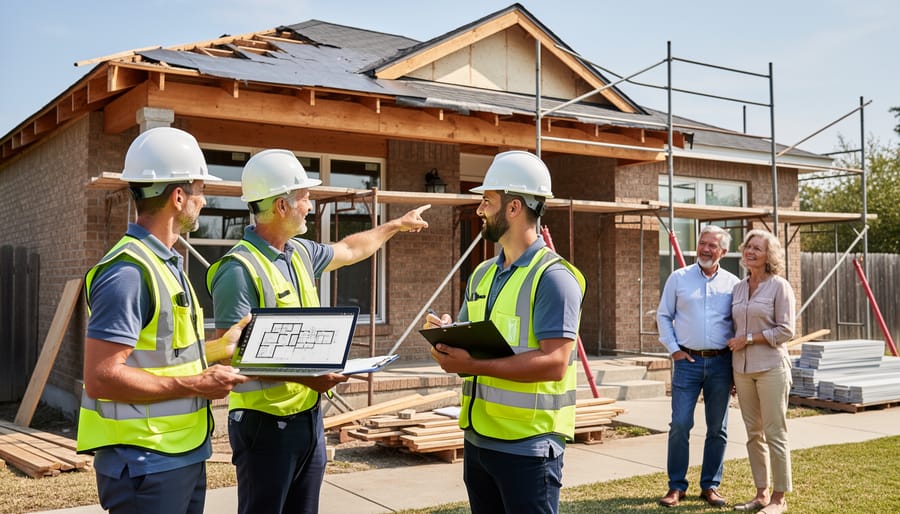
Property investment platforms offer direct access to buyers actively seeking distressed assets, making them essential channels for fire-damaged property marketing. These specialized venues attract investors comfortable with renovation projects and looking for below-market opportunities.
UK property auction platforms like Auction House, SDL Auctions, and Allsop remain the traditional go-to for damaged properties. These sites draw serious buyers with funding already secured, but your listing needs strategic optimization. Include clear damage disclosure in the first paragraph, high-quality damage documentation photos, and estimated repair costs from qualified surveyors. Set a realistic guide price 30-40% below comparable undamaged properties to generate competitive bidding while accounting for renovation investment.
Cash buyer networks such as Property Solvers, We Buy Any Home, and National Property Buyers provide faster alternatives, though often at lower prices. These platforms suit sellers prioritizing speed over maximum value. Your listing should emphasize quick completion potential and present comprehensive documentation upfront to accelerate their evaluation process.
Specialist damaged property portals like Property Rescue and Distressed Property Register connect directly with renovation specialists and property developers. These niche platforms typically yield higher-quality inquiries because users specifically target damaged assets. Optimize your listing with detailed damage reports, planning permission status if applicable, and location advantages that offset the property’s condition. Include renovation potential language highlighting characteristics developers value: solid structure, desirable location, development opportunity, or land value.
Cross-list across multiple platforms simultaneously to maximize exposure while maintaining consistent messaging and pricing across all channels.
Search Engine Optimization for Fire-Damaged Properties
SEO for fire-damaged properties requires a fundamentally different keyword strategy than conventional property marketing. Start by targeting long-tail phrases that buyers actually use: “fire damaged house for sale [city name]”, “fire salvage property UK”, and “burnt house renovation project”. These searches indicate high purchase intent and face less competition than generic property terms. Your listing descriptions should include specific damage details paired with location modifiers, as local SEO drives visits from qualified buyers searching within defined geographic areas.
Local SEO becomes particularly powerful when selling fire-damaged properties. Claim and optimize your Google Business Profile if applicable, and ensure consistent NAP (name, address, phone) information across all property portals and directories. Create location-specific content that addresses common buyer concerns: “structural assessment requirements in [county]” or “property developers specializing in fire restoration [region]”. These hyper-local pages attract investors actively working in your area.
Technical SEO matters more than most sellers realize. Fast-loading pages with clear structural hierarchy signal quality to both search engines and buyers. Implement Page Experience SEO best practices, mobile responsiveness, secure HTTPS connections, and logical navigation, to ensure your property listings rank competitively. Add structured data markup (schema.org/RealEstateListing) to help search engines understand and feature your property details in rich results. Finally, build authority by earning backlinks from property investment forums, local news coverage of the sale, and relevant industry blogs. Each quality link reinforces your property’s visibility to serious buyers conducting detailed research.
Paid Advertising Strategy: Google Ads and Social Media
Paid advertising accelerates your reach to qualified buyers who are actively searching for investment opportunities or browsing property-related content. Google Ads should form your primary channel, create search campaigns targeting high-intent keywords like “fire damaged property UK,” “damaged property investment,” and location-specific variations such as “fire damaged house Manchester.” Bid aggressively on these niche terms where competition is lower than mainstream property keywords. Set up remarketing campaigns to re-engage users who visited your listing but haven’t inquired.
On social media, Facebook and Instagram offer powerful targeting capabilities. Create custom audiences based on interests in property development, house flipping, renovation, and real estate investment. Use demographic filters to target investors aged 30-55 with household incomes above £50,000. Carousel ads work particularly well, showcase exterior damage in early frames, then reveal renovation potential and location benefits. While Facebook Shops serve retail businesses, property marketers benefit from Facebook’s lead generation forms that capture inquiries without forcing users off-platform.
Test different ad formats: single-image ads emphasizing price opportunity, video walkthroughs showing damage context, and collection ads featuring multiple fire-damaged properties if you’re a specialist seller. Monitor cost-per-lead closely, fire-damaged property campaigns typically achieve lower CPLs than standard property ads due to reduced competition. Some sellers even find customer wins on Reddit by authentically engaging in property investment communities, though this requires transparent participation rather than direct promotion.
Visual Content Strategy: Showing Damage Honestly While Highlighting Potential
Visual content makes or breaks fire-damaged property marketing. Buyers need to assess the extent of damage accurately, yet they also need to envision the property’s potential. The answer isn’t hiding damage through clever angles or filters, it’s showing reality while simultaneously demonstrating opportunity.
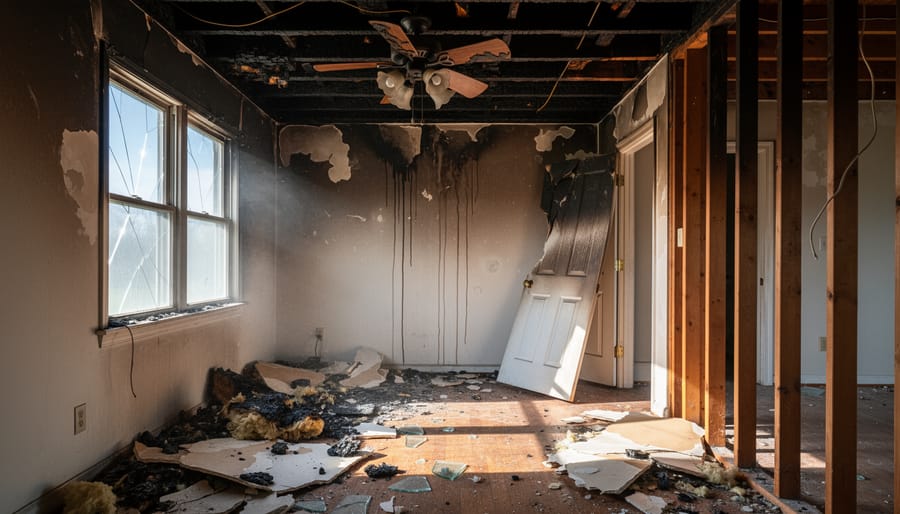
Start with professional photography that documents every affected area systematically. Capture wide shots showing structural elements, then detail shots of specific damage points like scorched walls, ceiling damage, or compromised flooring. These images establish credibility. Pair them with contextual shots: an intact kitchen in a property where only the upper floor suffered damage, or undamaged garden views that highlight the plot’s appeal. This dual approach satisfies due diligence while keeping hope alive.
Before-and-after visualizations transform perception. Commission 3D renders or photorealistic edits showing the same damaged room restored to modern standards. Place these side-by-side with current-state photos in your listings. Property developers and renovation specialists think in transformations, these visuals do that mental work for them, making your property memorable among dozens of alternatives.
Drone footage provides context that ground-level photography can’t. Aerial shots reveal the property’s footprint, surrounding area quality, garden size, and proximity to amenities, factors that remain valuable regardless of interior damage. For properties where fire affected only part of the structure, drone footage proves which sections escaped damage entirely.
- Professional photography with honest damage documentation builds immediate trust and reduces wasted viewings from unqualified buyers.
- 3D renders and visualizations help buyers see past current conditions, increasing inquiry rates by making potential tangible.
- Drone footage showcases location value and undamaged elements that photographs alone miss.
- Professional visual content requires upfront investment of £500-£2,000 depending on scope and property size.
- Overly polished renders may raise buyer skepticism if the gap between current state and visualization seems unrealistic.
- Extensive visual documentation takes time to produce, potentially delaying your marketing launch by 1-2 weeks.
Include floor plans marked with damage zones. These technical documents appeal to serious buyers who need to calculate renovation costs accurately. Mark affected areas in red, structurally sound sections in green, and areas requiring assessment in amber. This transparency positions you as a credible seller, not someone concealing problems.
Finally, create a dedicated image gallery on your listing site with clear labeling: “Current Condition,” “Structural Elements,” “Undamaged Areas,” and “Potential Outcomes.” This organization lets different buyer types focus on what matters most to them, investors scrutinize damage, while developers gravitate toward potential.
Crafting Your Messaging: Honesty as Your Competitive Advantage
The most effective marketing copy for fire-damaged properties doesn’t hide the damage, it owns it completely. Start every listing with a clear, matter-of-fact statement about the fire damage extent and what it means for buyers. “Fire-damaged Victorian terrace requiring full renovation” beats vague euphemisms like “needs modernization” every single time. This upfront honesty filters out time-wasters while attracting serious buyers who appreciate not having their time wasted.
Reframe the damage as your value proposition. Instead of dwelling on what’s lost, pivot immediately to what’s gained: development potential free from listed building restrictions if internal features are destroyed, a blank canvas for modern reconfiguration, or below-market acquisition costs that create equity from day one. Use specific numbers wherever possible, “£180,000 below comparable renovated properties in the same street” carries far more weight than “competitively priced.”
Double down on immovable assets the fire couldn’t touch. Location remains your strongest card. If you’re in a desirable postcode, lead with neighbourhood data: school ratings, transport links, recent comparable sales of renovated properties. Structural elements that survived, solid walls, roof integrity, foundations, deserve prominent mention with supporting survey evidence.
Create urgency through pricing psychology rather than artificial deadlines. Position your price as reflecting current condition while highlighting the gap between your asking price and post-renovation value. Phrases like “priced for immediate cash sale” or “reflects renovation requirement” signal seriousness to investors scanning multiple opportunities. Back this with a clear timeline: “Seller ready to complete within 28 days for the right offer” demonstrates commitment that genuine buyers recognize and respond to.

Pricing Strategy and Value Communication
Setting the right price for a fire-damaged property requires a calculated approach that balances realism with opportunity. Start by obtaining detailed repair cost estimates from qualified contractors, itemized quotes for structural work, roof replacement, electrical systems, and cosmetic finishes. These hard numbers form your baseline deduction from comparable undamaged properties in your area.
Research recent sales of similar properties in similar condition. Contact estate agents who specialize in distressed sales or check auction results for fire-damaged properties with comparable damage severity. Factor in the current market temperature: in a hot market, buyers may accept smaller discounts for renovation opportunities; in a slower market, aggressive pricing becomes essential to generate interest.
The sweet spot typically sits 30-50% below comparable undamaged property values, depending on damage extent. However, pricing isn’t just about the number, it’s about how you frame it.
In your marketing materials, lead with the opportunity cost, not just the asking price. Show the calculation: “Asking £185,000 (comparable undamaged properties: £340,000; estimated renovation costs: £95,000; built-in equity: £60,000).” This transparent breakdown positions the price as logical rather than arbitrary, helping investors immediately see the profit potential.
Emphasize terms that add value beyond price: quick completion timelines, cash buyer preference, or willingness to negotiate on fixtures and fittings. These elements often matter as much as the final figure to your target buyers.
Measuring Campaign Performance and Optimizing Results
Tracking the right metrics transforms your fire-damaged property campaign from guesswork into a refinement engine. Start by monitoring inquiry quality rather than volume alone. Ten serious cash buyers matter more than fifty tyre-kickers asking if you’ll drop the price by 40%. Score each inquiry: does the contact mention investment experience, request structural reports, or ask about completion timelines? These signal genuine interest worth your time.
Viewing conversion rate reveals whether your online presentation matches reality. If twenty inquiries yield two viewings, your photos may oversell the damage or your transparency hasn’t convinced buyers the opportunity is legitimate. Conversely, if viewings happen but offers don’t follow, your pricing likely misaligns with the actual renovation cost buyers calculate on-site.
Track these core metrics weekly to spot trends before they cost you months:
| KPI | Healthy Benchmark | Warning Sign | Optimization Action |
|---|---|---|---|
| Inquiry-to-viewing rate | 25-35% | Below 15% | Revise photos/description for accuracy; add video walkthrough |
| Viewing-to-offer rate | 40-60% | Below 30% | Reassess pricing against repair estimates; provide more documentation upfront |
| Average days on market | 45-90 days | Beyond 120 days | Adjust price by 5-10%; expand to additional platforms; refresh ad creative |
Use Google Analytics to identify which channels drive quality traffic. If your Google Ads campaign generates three times the inquiries of organic search but half the viewing conversion rate, reallocate budget toward SEO and specialist property platforms where serious buyers research.
Set monthly review checkpoints. Compare cost per qualified inquiry across channels, test new ad copy that emphasizes different property strengths, and eliminate underperforming tactics ruthlessly. The fire-damaged property market rewards nimble adjustments based on real feedback, not stubborn commitment to an initial plan that isn’t delivering offers.
Marketing a fire-damaged property successfully demands a fundamentally different approach than traditional property sales. The strategies outlined throughout this guide demonstrate that transparency isn’t a liability, it’s your greatest asset when combined with compelling opportunity positioning and targeted digital marketing.
The buyers you need to reach exist in specific digital spaces: property investment platforms, specialist search queries, and social networks where developers and cash buyers actively seek opportunities. Reaching them requires precise targeting, honest visual documentation, and messaging that acknowledges damage while highlighting genuine potential.
Your success metrics matter more than vanity numbers. Track inquiry quality, viewing conversion rates, and buyer engagement depth rather than simple traffic volumes. These insights allow you to refine your approach continuously, allocating budget toward channels that attract serious, qualified buyers.
The complexity of this specialized market makes professional digital marketing expertise particularly valuable. A data-driven strategy informed by campaign performance, market conditions, and buyer behavior patterns significantly increases your probability of achieving optimal sale outcomes within a reasonable timeframe. The right marketing approach transforms a challenging property situation into a clear investment opportunity for the right buyer.